
Entry & progression
Most diesel engines that stop, stop because of fuel. Not because they are worn out. Because something got into the fuel, or air got into the line. Fuel is where a new engineer earns their keep.
The path
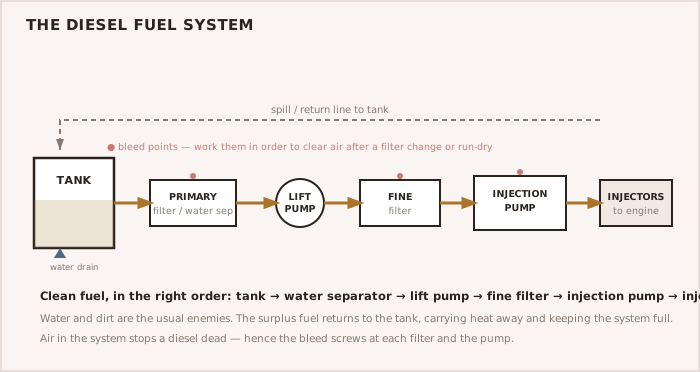
- Tank - where the fuel and the trouble both live.
- Primary filter / water separator - the coarse filter, with a clear bowl. It takes out water and the big dirt.
- Lift pump - low pressure, moves fuel from the tank to the engine.
- Secondary filter - the fine filter, mounted on the engine. Protects the injection equipment.
- Injection pump - raises the pressure enormously and meters the shot.
- Injectors - atomise the fuel into the cylinder.
- Return line - surplus fuel goes back to the tank, warm.
Water and bugs
Water gets into fuel by condensation in a half-empty tank, through a bad filler cap, or in the fuel you bought. It sits under the diesel because it is denser. It corrodes injection equipment, and at the interface between water and diesel a microbial growth - diesel bug - lives and multiplies, producing a black sludge that blocks filters and eats tank coatings.
Keep tanks full. A full tank has no air in it, and air is what condenses. Drain the separator bowl on every round. If you find water, find out where it came from - a bowl you empty every day without asking why is a bowl that is telling you something you are not listening to.
CAUTION — Rough weather is when dirty fuel bites Sludge and water sit quietly at the bottom of the tank all season. Then the vessel starts pitching, the tank contents get stirred, and everything on the bottom goes straight to the primary filter. Engines fail in bad weather far more often than in good weather, and it is usually not a coincidence.
The lesson is that fuel cleanliness is preventive work done in flat water. You cannot polish fuel in a seaway.
Air in the fuel - and bleeding
A diesel injection system cannot pump air. Air is compressible; fuel is not. Let air into the line - by running the tank dry, by changing a filter, by a loose fitting on the suction side - and the engine will run rough, hunt, and stop.
Bleeding a fuel system
- Fix the cause first. Refill the tank, tighten the fitting, finish the filter change. Bleeding a system that is still drawing air is pointless.
- Fill the filters with clean fuel before fitting them, if the installation allows it. It saves most of the work.
- Open the bleed screw nearest the tank and work towards the engine. Pump the lift pump lever until fuel runs out clear and free of bubbles, then close it.
- Move to the next bleed point and repeat, working along the system in order.
- Bleed at the injection pump, then, if the engine still will not fire, crack the injector unions and turn the engine over until fuel appears.
- Clean up every drop. Diesel in the bilge is a slip hazard, an environmental report, and a fire load.
TIP — Carry the filters. All of them. The most common reason a small vessel is towed home is a blocked fuel filter with no spare aboard. Filters are cheap, small, and the single highest-value item in the spares locker. Two of each, minimum, plus the seals, plus a spanner that fits.