
Entry & progression
The ISM Code is the reason your yacht has a manual for everything. It is also the reason the master has overriding authority in writing. Learn to use it, not resent it.
The International Safety Management Code is made mandatory by SOLAS Chapter IX. Its objectives are to ensure safety at sea, prevent human injury or loss of life, and avoid damage to the environment and to property. It came out of a run of casualties in which the ship was sound, the crew were certificated, and the organisation was rotten.
What the Code actually requires
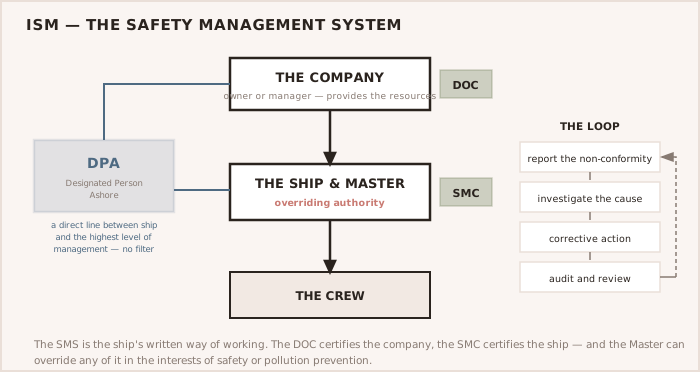
A Safety Management System: a documented, functioning system by which the Company runs its vessels safely. The Code sets out what it must contain.
- A safety and environmental protection policy.
- Instructions and procedures for the safe operation of ships and protection of the environment.
- Defined levels of authority and lines of communication between shore and ship, and among shipboard personnel.
- Procedures for reporting accidents and non-conformities.
- Procedures to prepare for and respond to emergency situations.
- Procedures for internal audits and management reviews.
The three people who matter
| Role | What they are |
|---|---|
| The Company | Whoever has assumed responsibility for the operation of the ship — which may not be the owner |
| The Designated Person Ashore (DPA) | Has direct access to the highest level of management; the link between ship and shore for safety and pollution prevention |
| The Master | Implements the SMS aboard, verifies it works, reports its defects — and holds the overriding authority |
The DPA is the Code's most quietly radical invention. A named person ashore, with direct access to the top of the organisation, whom the master can call over the head of anyone in between. If you do not know your DPA's name and mobile number by heart, you are not ready for the oral.
What the master must do with the SMS
- Implement the safety and environmental protection policy aboard.
- Motivate the crew in the observation of that policy.
- Issue appropriate orders and instructions in a clear, simple manner.
- Verify that specified requirements are observed.
- Review the SMS and report its deficiencies to the shore-based management.
That last one is the duty people skip. The SMS is not scripture handed down; it is a working document, and the Code expressly obliges the master to review it and report where it does not work. A procedure that cannot be complied with on your vessel is a non-conformity in the SMS, not in your crew. Say so, in writing, to the DPA.
Certificates and audits
The Company holds a Document of Compliance (DoC). The ship holds a Safety Management Certificate (SMC). Both are verified by audit. Internal audits are run by the Company; external audits by the flag state or its recognised organisation.
NOTE — The SMS on a yacht is only as good as the crew turnover it survives Yacht crews rotate fast. A system that lives in the head of a chief officer who leaves in October is not a system. If a competent new joiner cannot open the SMS and find out how this vessel does a thing, the SMS has failed — however thick the folder is. Write procedures for the crew you will have, not the crew you have.
The Code's real subject is not paperwork. It is whether the organisation ashore has given the people afloat what they need to be safe.