
Entry & progression
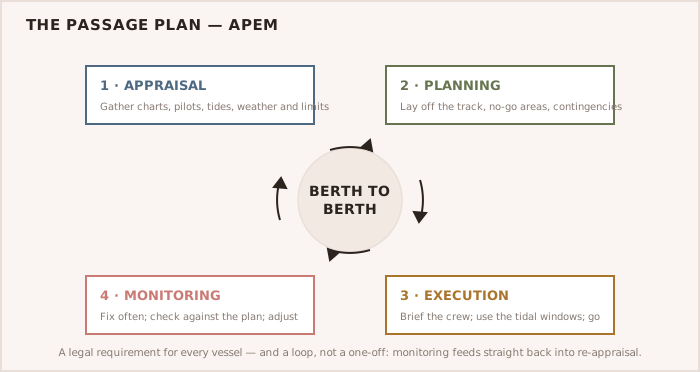
A passage plan runs berth to berth, and it is the master's responsibility discharged through the navigating officer — often, on a yacht, you. Four stages: appraise, plan, execute, monitor. Skip one and you are simply steering.
1. Appraise — gather everything before deciding anything
- Charts for the whole route, corrected up to date — paper, electronic, or both
- Sailing Directions, Lists of Lights, Lists of Radio Signals, tide tables and tidal stream atlases
- Navigational warnings, notices to mariners, and any local port or coastal-state requirement
- The vessel's own limitations: draught, air draught, turning circle, stopping distance, manoeuvring characteristics, fuel and range
- Weather — the forecast, the climatology, and what the season is capable of
- The owner's or charterer's requirements — and the honest limits of them
2. Plan — commit it to the chart
Lay the tracks. Mark every course, every distance, every waypoint and every alteration. Then mark the things that keep you alive:
- No-go areas — shaded, unambiguous, and drawn wide enough to include the uncertainties
- Abort points and contingency anchorages — the last point at which you can still not do this
- Clearing bearings and clearing ranges, parallel index lines, and the transits that make a danger obvious without a fix
- Wheel-over points, not just waypoints — the yacht turns before the waypoint, not at it
- Under-keel clearance at every shallow point, worked against the actual tide at the actual time
- The points where you will call the master, and the points where you will change from one navigational method to another
3. Execute — the plan meets the day
Now the tide is two hours out, the visibility has closed, and the guests want to leave an hour late. The plan is executed against the conditions that actually exist — and if those conditions have broken the assumptions the plan was built on, the plan is amended, deliberately, and everyone is told. A plan that is quietly abandoned is worse than no plan, because half the bridge still believes it.
4. Monitor — the stage that is actually the job
Monitoring is continuous cross-checking of where you are against where the plan says you should be, using independent methods. Visual bearings against GNSS. Radar range against the echo sounder. Parallel index against the chart. If two independent methods agree, you are probably where you think you are. If they disagree, you do not know where you are, and that is a fact you must act on immediately rather than argue with.
WARNING — The plan is not a defence No passage plan relieves the watchkeeper of the COLREGs, of Rule 2, or of the duty to use judgement. If following the plan would put you in a close-quarters situation, you leave the plan. The plan is the best thinking you did yesterday. The watch is the thinking you are doing now.
CAUTION — Australian coastal requirements Some Australian waters — the Great Barrier Reef and Torres Strait region in particular — carry specific pilotage, reporting and route requirements. AUS_FACTS does not record them and this course does not state them. Before planning any passage in Australian waters, confirm the current requirements with AMSA and the relevant authority. Do not take the shape of the requirement from a training course.