
Entry & progression
Certificate: MCA Efficient Deck Hand — the qualification for an experienced deck rating, covering seamanship, watchkeeping support and deck work to the support level. Entry: qualifying sea service as a deck rating plus STCW basic safety. Supports the deck rating pathway (Navigational Watch Rating) and progression toward officer training.
The seaman's skills
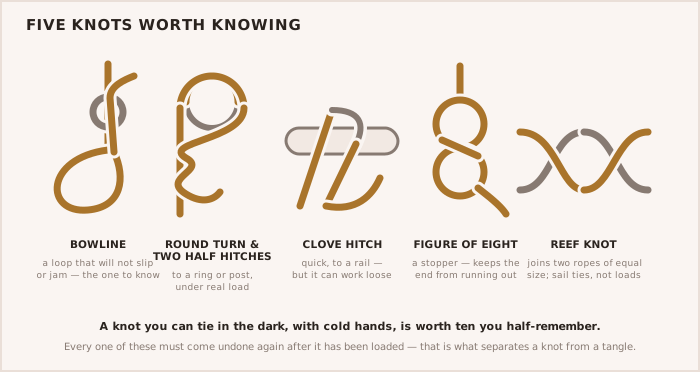
- Know the essential knots, bends, hitches and whippings, and the correct use of each.
- Handle wire and rope, make basic splices, and care for cordage so it does not fail.
- Rig and use blocks, tackles and lifting gear safely and within their limits.
- Do mooring and anchoring work: handling the lines and springs, and working the ground tackle.
Ropework is the deck hand's core craft: the right knot for the job, made correctly, and cordage that is cared for and inspected so it does not part under load. Beyond knots, the deck hand handles wires and lines during mooring and anchoring, rigs blocks and tackles for lifting, and keeps the deck gear in good order. All of this is done with an eye to safety, because deck work with lines and gear under load is where many injuries happen.
WARNING — Never stand in the bight or the snap-back zone Ropes and wires under load can part and whip back with lethal force. The deck hand never stands in the bight of a line or in the snap-back zone, and keeps clear of gear under tension.
TIP — The right knot, made right A bowline for a secure loop, a clove hitch to a post, a rolling hitch to take a strain along another line — knowing the right knot for the job and tying it correctly is the mark of the efficient deck hand.