
Entry & progression
Certificate: STCW Elementary First Aid (A-VI/1-3) — one of the four STCW basic safety elements. It teaches every seafarer to take immediate action on encountering an accident or medical emergency. Entry: none. Progresses to Medical First Aid (A-VI/4-1) and Proficiency in Medical Care (A-VI/4-2). Revalidation: refresher training required, typically every 5 years.
The primary survey
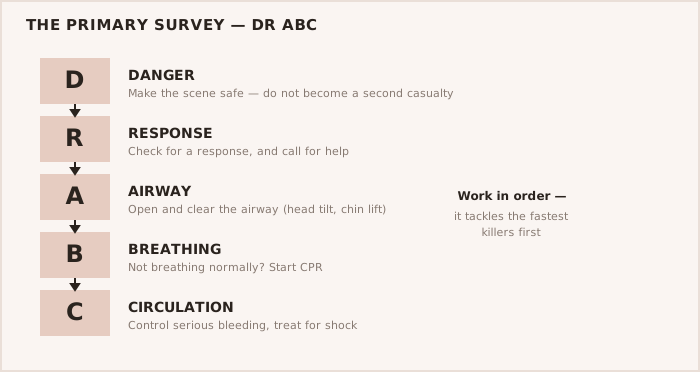
The primary survey — DR ABC
- Danger — make the scene safe for you and the casualty before approaching.
- Response — check whether the casualty responds to a question or a gentle shake, and call for help.
- Airway — open the airway by tilting the head back and lifting the chin, and clear any obstruction.
- Breathing — look, listen and feel for normal breathing; if it is absent, start CPR.
- Circulation — control any serious bleeding and treat the casualty for shock.
The primary survey is done in order because the steps address the fastest killers first: a blocked airway or absent breathing kills in minutes, faster than bleeding. The rescuer works through Danger, Response, Airway, Breathing and Circulation, dealing with each problem as it is found before moving on. The single most important habit is to check for danger first — a rescuer who becomes a second casualty helps no one, so the scene is made safe before the casualty is reached.
WARNING — Danger first — never become a second casualty Never rush to a casualty before the scene is safe. With electricity, fumes, machinery, an enclosed space or a fall risk, a rescuer who is overcome becomes a second casualty and makes the situation worse.
TIP — Deal with each step before the next DR ABC is done in order because it tackles the fastest killers first. Open and clear the airway before worrying about a wound; a blocked airway kills faster than most bleeding.