
Entry & progression
Certificate: STCW Fire Prevention and Fire Fighting (A-VI/1-2) — one of the four STCW basic safety elements. It teaches every seafarer to prevent fire and to fight it in its early stages as part of a team. Entry: none. Progresses to Advanced Fire Fighting (A-VI/3) for those who will control operations. Revalidation: refresher training required, typically every 5 years.
The fire triangle and tetrahedron
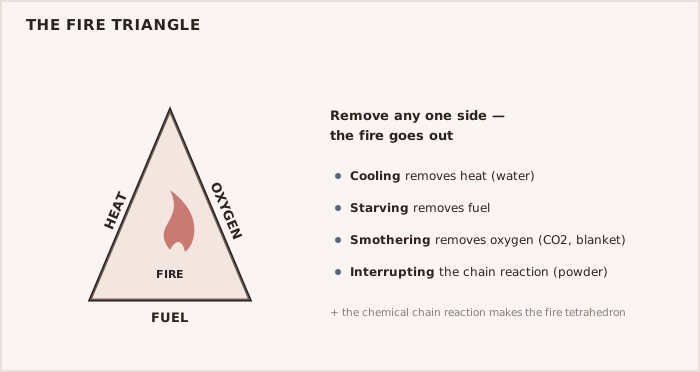
Fire needs three things — heat, fuel and oxygen, the fire triangle — plus a self-sustaining chemical chain reaction, which makes the fire tetrahedron. Remove any one and the fire goes out: cooling removes heat (as water does), starving removes fuel, smothering removes oxygen (as a fire blanket or CO2 does), and some agents interrupt the chain reaction chemically. Understanding this tells you why a given extinguisher works and why the wrong one can be useless or dangerous.
| Class | Fuel | Suitable media |
|---|---|---|
| A | Solids: wood, paper, textiles | Water, foam |
| B | Flammable liquids: fuel, oil | Foam, CO2, dry powder |
| C | Gases | Dry powder, isolate the supply |
| D | Metals | Special dry powder only |
| F (K) | Cooking oils and fats | Wet chemical |
| The classes of fire and the media that suit them. |
WARNING — The wrong medium can be deadly Never use water on a burning liquid or on live electrical equipment: water spreads a liquid fire and conducts electricity back to the firefighter. Match the medium to the class of fire — this is the single most important firefighting judgement.
NOTE — Electrical fires: cut the power first Fire in electrical equipment is fought by first isolating the power, then using a non-conductive medium such as CO2 or dry powder. Once the power is off, it becomes a fire of whatever is burning.