
Portable extinguishers
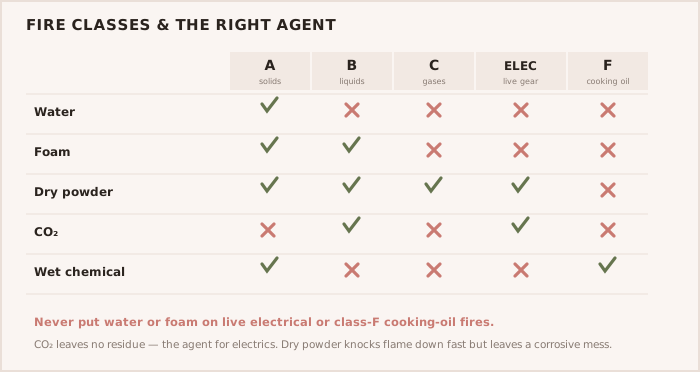
- Water: for Class A (solids); cools and soaks; never on liquids or electrics.
- Foam: for Class A and B (liquids); smothers and cools; forms a blanket over a liquid.
- CO2: for electrical and Class B; smothers, leaves no residue; poor in wind and displaces oxygen in a space.
- Dry powder: for B, C and electrical; knocks flame down fast; makes a mess and reduces visibility.
Fixed systems
Beyond portable extinguishers, ships carry fixed firefighting systems for the spaces at greatest risk: fixed CO2 or other gas flooding for machinery spaces, and water sprinkler or spray systems in accommodation. A gas-flooding system works by displacing the oxygen in a sealed space, so the space must be evacuated, closed and the fuel and ventilation isolated before it is released. The seafarer must know what systems the ship has, where their controls are, and the strict procedure for using a gas-flooding system safely.
WARNING — Evacuate and seal before flooding a space with gas A fixed CO2 (or gas) system works by removing the oxygen from the space — which will also kill anyone inside. The space must be evacuated, all persons accounted for, and the space closed and the fuel/ventilation isolated before it is released.
TIP — Match the extinguisher, aim at the base Choose the extinguisher for the class of fire, and aim at the base of the flames, not the top — you are attacking the fuel, not the visible fire. A short burst, sweeping across the base, is more effective than a continuous jet at the flames.