GMDSS-GOC-L1.2

Distress management and MSI across the sea areas

The GOC operator manages distress traffic and safety information across the full system, choosing the right bearer and following the procedures. This lesson covers those functions.

Handling distress on the full system
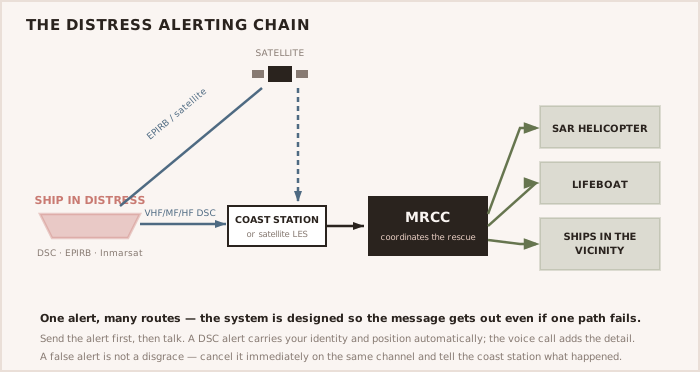
The distress alerting chain

Managing a distress on the full GMDSS

  1. Select the correct bearer for the sea area — VHF, MF/HF DSC or satellite.
  2. Send the DSC distress alert (with position) or the satellite distress call.
  3. Follow up by voice or radiotelex, acknowledge received alerts, and relay a distress if the casualty cannot.
  4. Coordinate with the rescue co-ordination centre, and log all the distress traffic.

Maritime safety information

  • Receive maritime safety information (navigational and weather warnings) automatically by NAVTEX and satellite EGC.
  • Understand distress alerting, relaying and acknowledgement, and the operator's obligations on receiving an alert.
  • Know the procedures to avoid, and to cancel, false alerts.
  • Maintain the radio log and the equipment through the voyage.

TIP — Choose the bearer for the area The skill of the GOC operator is matching the bearer to the situation: VHF close in, MF/HF offshore, satellite in the open ocean. Know which is available and reliable where you are.

WARNING — You must act on a received distress On receiving a distress alert the operator has an obligation to respond appropriately — acknowledge, relay if needed, and assist the coordination. A received alert is never simply ignored.

Practice questions

5 questions
recallcore

recall · core

Maritime Safety Information (navigational and weather warnings) is received automatically via: (a) Channel 16 voice only (b) NAVTEX and satellite EGC (c) The echo sounder (d) AIS targets

recallcore

recall · core

On receiving a distress alert, the GOC operator must: (a) Ignore it (b) Respond appropriately — acknowledge, relay if needed, assist coordination (c) Delete it (d) Switch off

recallcore

recall · core

For a distress in the open ocean far from any coast, the operator would use: (a) VHF only (b) Satellite (or HF) communications (c) A loudhailer (d) Flags only

recallcore

recall · core

A distress relay is sent when: (a) The weather is bad (b) The casualty cannot send its own alert, or to pass on a received one (c) Testing the radio (d) Nothing happens

recallcore

recall · core

The radio log records: (a) Only the weather (b) The distress and safety traffic and equipment tests (c) The menu (d) Nothing

AI-drafted catalogue content pending SME review. Verify against current provider materials.

School