
Entry & progression
Certificate: the GMDSS operator qualification for vessels operating in sea area A1 (within VHF coverage of a coast station). Covers VHF/DSC operation and the GMDSS system for A1. Entry: none formally. Progresses to the General Operator's Certificate (GOC) for all sea areas.
The system and the sea areas
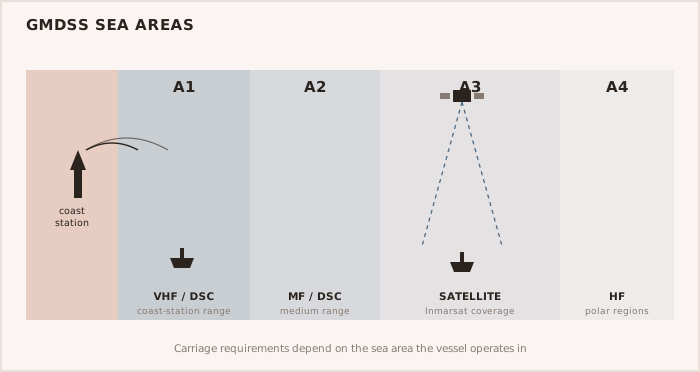
GMDSS divides the sea into areas defined by the radio coverage available: A1 within VHF/DSC range of a coast station, A2 within MF range, A3 within Inmarsat satellite coverage, and A4 the polar regions beyond satellite reach. The carriage requirements — what radio equipment a vessel must carry — depend on the sea area it operates in, so a vessel working only in A1 carries VHF with DSC, and its operator needs the ROC. The system provides the core functions of distress alerting, search-and-rescue coordination, and the broadcast of maritime safety information.
- Sea area A1 is the area within VHF/DSC coverage of a coast station.
- Every station has a unique MMSI, and the DSC radio is connected to GPS so alerts carry a position.
- Channel 70 is the VHF DSC channel; Channel 16 is the voice distress and calling channel.
- The operator must be able to send, acknowledge and relay DSC alerts and follow up by voice.
NOTE — Right area, right equipment The GMDSS carriage requirements depend on the sea area a vessel operates in. The ROC matches the VHF/DSC equipment of an A1 operation; venturing beyond A1 requires the equipment and the operator qualification (GOC) for the wider areas.
WARNING — A false DSC alert launches a real response A DSC distress alert reaches the coastguard and every DSC station in range and starts a rescue response. Cancel any false alert immediately by voice on Channel 16, and never send one carelessly.