
Managing human performance
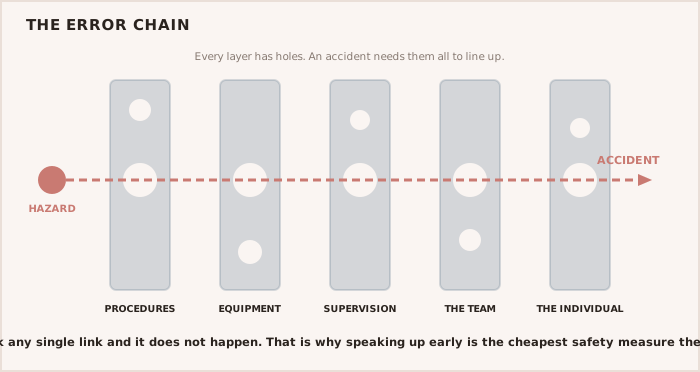
- Fatigue and stress degrade performance and judgement — manage rest hours and workload actively.
- Situational awareness can be lost gradually; watch for the signs and rebuild it deliberately.
- Use structured decision-making, and question assumptions, especially under pressure or when rushed.
- Learn from near-misses and errors without blame, to improve the system rather than punish the person.
Fatigue is a genuine safety hazard, impairing judgement much as alcohol does, so managing rest hours under STCW and the MLC is a safety duty rather than an administrative one. Workload that is too high or too low both erode performance, and situational awareness — the accurate picture of what is happening and what will happen next — can slip away without the officer noticing. Structured decision-making and a no-blame culture around near-misses are the tools that keep human performance a strength rather than a weakness.
WARNING — Fatigue is a safety hazard Fatigue impairs judgement like alcohol. Managing rest hours under STCW/MLC is a safety duty, not paperwork, and a tired officer or crew is an accident waiting to happen.
TIP — Question the assumption Many incidents follow an unquestioned assumption — that a light is a certain vessel, that the plotter is right, that the other ship will give way. Structured decision-making deliberately questions the assumption before acting on it.