
The auxiliary machinery
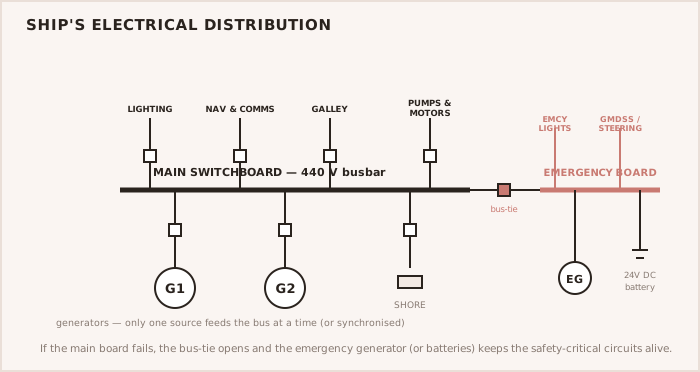
- Electrical: the batteries, charging, distribution and protection (fuses and breakers), and safe basic fault-finding.
- Steering gear: the hydraulic or mechanical system, its routine checks, and — importantly — the emergency steering arrangement.
- Bilge and ballast pumping, and the fresh-water and sewage systems.
- Generators or auxiliary engines where fitted, and their operation and care.
Beyond the main engine, a small commercial vessel has a set of auxiliary systems the operator must know and maintain. The steering gear deserves special attention: the operator must know how to change to emergency steering and operate it, because a steering failure at the wrong moment is dangerous. The electrical system powers navigation, communication and machinery, and its safe operation and basic fault-finding are part of the job.
WARNING — Know the emergency steering cold Every operator must be able to change to emergency steering quickly and operate it, and know how to communicate the changeover with the person conning the vessel. A steering failure in confined water gives no time to learn.
TIP — Trace the systems while all is well Spend time in harbour tracing the electrical, steering, bilge and fuel systems and finding the valves, isolators and controls. Knowing where everything is makes fault-finding and emergency action far faster.