
The forces and the handling
- Understand the propeller's thrust and transverse effect, the rudder, and wind and current on the hull and superstructure.
- Know squat and interaction in shallow and narrow water, and reduce speed accordingly.
- Handle the ship in berthing and unberthing using lines and springs, allowing for wind and tide, with an escape route.
- Know the drills for steering and telegraph failure, emergency steering, and anchoring including dragging.
Manoeuvring characteristics
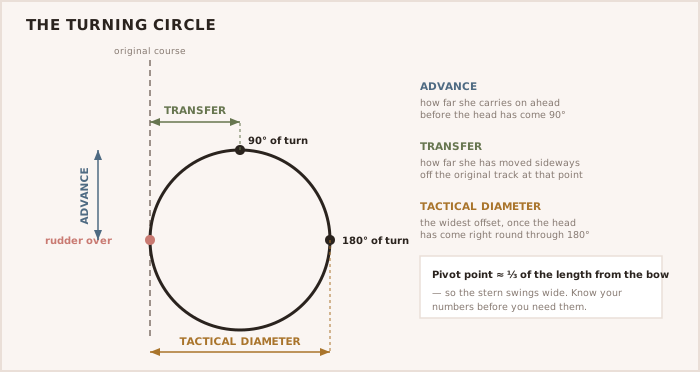
The Master knows the ship's manoeuvring characteristics — her turning circle, advance and transfer, stopping distance and crash-stop, and how she behaves at slow speed and astern — and uses them to plan a manoeuvre with a margin. Handling a large yacht in a marina, coming alongside in wind and tide, picking up a pilot, or manoeuvring in confined water all demand a slow, controlled approach with an abort planned. The examiner wants to hear the reasoning: how the forces act on this ship and how the Master would use or recover from them.
TIP — Slow, controlled, with an escape route A manoeuvre made slowly, with an abort planned, beats a fast one that cannot be undone. Speed can be added; it cannot always be taken off in time, especially in confined water where squat and interaction bite.
WARNING — Know the ship's stopping distance A large yacht carries her way a long distance and does not stop quickly. The Master plans manoeuvres around the ship's real stopping distance and crash-stop, not an optimistic guess.