
Entry & progression
Certificate: STCW Medical First Aid Onboard Ship (A-VI/4-1) — to provide immediate first aid in the event of accident or illness aboard, beyond basic elementary first aid. Entry: STCW basic Elementary First Aid. Progresses to Proficiency in Medical Care (A-VI/4-2).
A structured approach
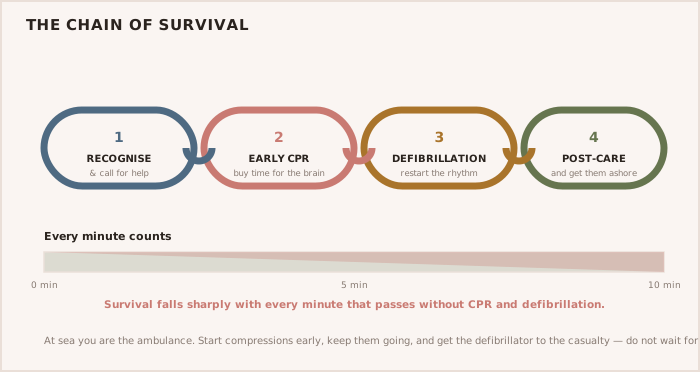
The primary survey (DR ABC)
- Danger — make the area safe for you and for the casualty before approaching.
- Response — check whether the casualty responds, and call for help.
- Airway — open and clear the airway.
- Breathing — check for breathing; if it is absent, begin CPR.
- Circulation — control any serious bleeding and treat for shock.
Acting on the survey
- Assess the scene and the casualty systematically, not at random.
- Begin resuscitation (CPR) without delay when breathing is absent.
- Control serious bleeding, immobilise injuries, and treat for shock.
- Use the ship's medical equipment and record what you find and do.
WARNING — Danger first — do not become a second casualty Never rush to a casualty before making the scene safe. With electricity, fumes, machinery or a fall risk, a rescuer who becomes a second casualty helps no one and makes the situation worse.
TIP — Follow DR ABC every time A structured primary survey — Danger, Response, Airway, Breathing, Circulation — makes sure the life-threatening problems are found and dealt with in the order that matters, even under stress.