
Entry & progression
Certificate: STCW Personal Safety and Social Responsibilities (A-VI/1-4) — one of the four STCW basic safety elements. It covers working safely, contributing to emergencies, and living and working effectively aboard ship. Entry: none. Revalidation: the safety elements are refreshed through STCW updating training.
The hazards and their control
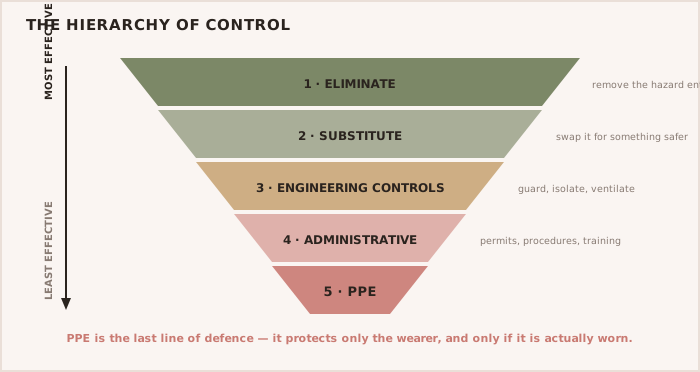
The seafarer works among many hazards: machinery and moving parts, electricity, heights and working over the side, enclosed spaces, chemicals and fumes, heavy loads and lines under tension, slips, trips and falls, and noise. These are controlled by the safe systems of work set out in the Code of Safe Working Practices — risk assessment before a hazardous job, permits to work for the high-risk tasks, the correct personal protective equipment, and safe methods. The individual seafarer contributes by following those systems, using the PPE, reporting hazards, and looking out for their own and their shipmates' safety.
- Recognise the shipboard hazards: machinery, electricity, heights, enclosed spaces, chemicals, loads and lines, slips and falls.
- Follow the safe systems of work — risk assessment, permits to work, and safe methods.
- Use the correct personal protective equipment for the job.
- Report hazards and near-misses, and look out for your own and your shipmates' safety.
WARNING — Enclosed spaces are the deadliest hazard Entering an enclosed space — a tank, cofferdam or void — without testing the atmosphere, a permit and a standby person is a leading cause of shipboard deaths, often of would-be rescuers. Never enter without the proper precautions.
TIP — PPE and permits are not optional The personal protective equipment and the permit-to-work system exist because people are hurt doing routine jobs without them. Using the right PPE and following the permit system are personal responsibilities, not box-ticking.