
Entry & progression
Certificate: STCW Security Awareness (A-VI/6-1) — the basic maritime security training every seafarer must hold. It gives an awareness of security threats and the seafarer's role in the ship's security. Entry: none. Progresses to Designated Security Duties (A-VI/6-2) for those with assigned security duties.
Why security matters and the framework
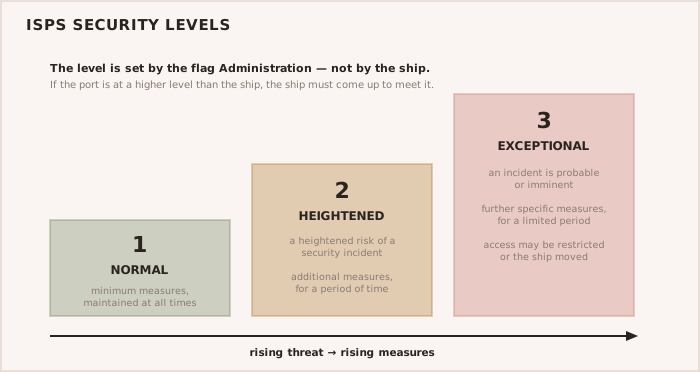
Maritime security protects ships, ports and the people in them against threats such as terrorism, piracy, smuggling, stowaways and theft. The framework is the International Ship and Port Facility Security (ISPS) Code, which requires ships to have a Ship Security Plan, a Ship Security Officer, and defined security levels, and to control access and watch for threats. Every seafarer, even without a specific security duty, contributes to the ship's security by being aware, following the security procedures, and reporting anything suspicious. Security is not only the concern of the Ship Security Officer — it depends on the whole crew being alert.
- Maritime security guards against terrorism, piracy, smuggling, stowaways and theft.
- The ISPS Code is the international framework: the Ship Security Plan, the Ship Security Officer, and the security levels.
- The ship controls access, monitors for threats, and raises its measures as the security level rises.
- Every seafarer contributes by being aware, following the procedures, and reporting the suspicious.
NOTE — Security depends on the whole crew The ISPS Code sets the framework and the Ship Security Officer leads it, but security depends on every seafarer being alert, following the procedures and reporting anything suspicious. An aware crew is the ship's best security.
TIP — Know your ship's security level The ISPS security levels (1 normal, 2 heightened, 3 exceptional) set how much security is applied. Knowing the current level, and what it requires of you, is part of basic security awareness.