
IALA buoyage
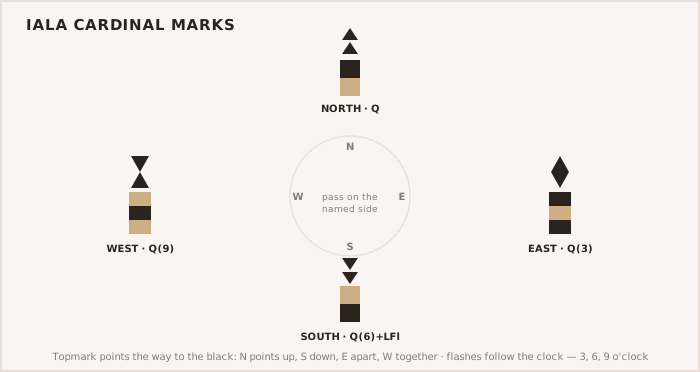
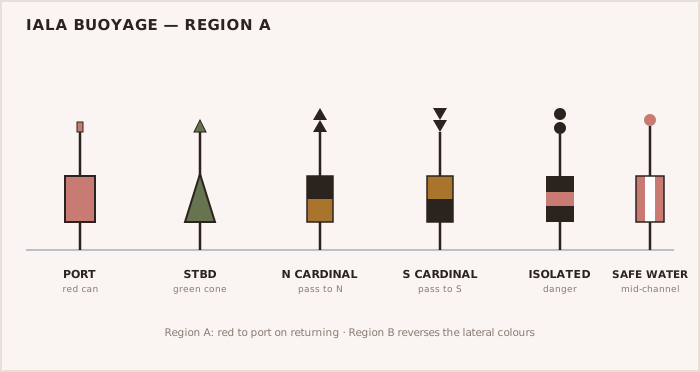
| Mark | Meaning | Region A colour/shape | Light |
|---|---|---|---|
| Port lateral | Leave to port entering | Red can | Red |
| Starboard lateral | Leave to starboard entering | Green cone | Green |
| North cardinal | Safe water to the north of it | Black over yellow | VQ or Q white |
| Isolated danger | Danger with clear water around | Black/red bands, 2 balls | Fl(2) white |
| Safe water | Landfall / mid-channel | Red/white stripes | Iso/Occ or 1 long-flash white |
| IALA Region A (UK/Europe): 'red to port when returning'. |
The lateral marks show the sides of a channel and are read in the local direction of buoyage, which generally runs into harbour from seaward. Cardinal marks tell you which side to pass a danger — pass to the north of a north cardinal, and so on — using black-and-yellow bands and cone topmarks. At night each type has a characteristic light so it can be identified in the dark.
Pilotage
Pilotage is close-quarters navigation by eye rather than by continuous plotting. A pilotage plan, prepared from the chart and pilot book before arrival, uses transits (two objects in line) as leading lines to follow, clearing bearings to stay off the dangers, and depth as a backstop. With the plan ready the skipper can keep their eyes out of the boat and conn her in against the marks, while a crew member watches the depth and calls the buoys.
TIP — Prepare pilotage before you arrive The time to work out the leading lines, clearing bearings and buoy sequence is on passage, in calm, not at the harbour entrance with the boat moving and the crew waiting. A plan on a card frees you to look out of the boat.
WARNING — Confirm the direction of buoyage Lateral marks only make sense in the local direction of buoyage. Check it on the chart so you keep red to the correct side; getting it backwards can put you on the wrong side of the channel.