
Anchoring securely
Coming to anchor
- Choose good holding ground with shelter and swinging room, clear of cables, moorings and other boats.
- Approach slowly into the wind or tide, stop the boat over the chosen spot, and let go with the boat just making sternway.
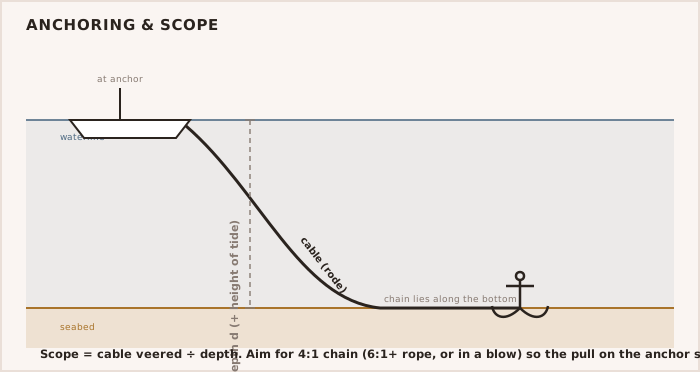
- Pay out a scope of about 4 times the depth for chain, or 6 times for rope, measured at high water, then snub and check she is holding.
- Take a transit or set an anchor alarm, and keep an anchor watch in poor holding or worsening weather.
Holding depends on the type of ground, the scope of cable, and the set of the anchor. Mud and sand generally hold well; weed, rock and shingle poorly. Scope matters because it is the horizontal pull along the seabed that digs the anchor in — too little cable and the pull lifts the shank and the anchor drags. A transit ashore is the simplest dragging check: if the two objects that were in line start to open, the boat is moving.
Mooring, warps and knots
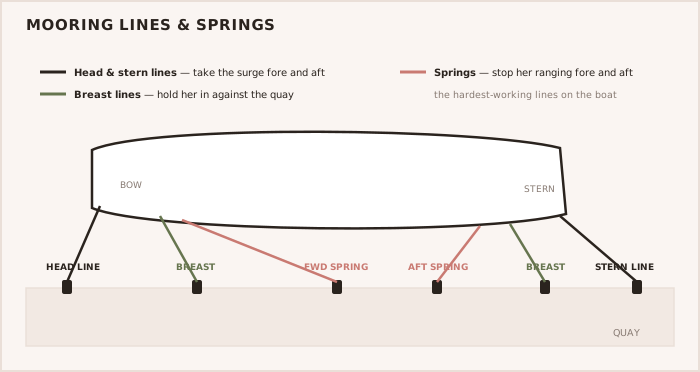
- Rig and use warps, springs and fenders correctly for the berth and the conditions, allowing for the range of tide.
- Take and secure a tow, and be towed, safely, with a strong point and a bridle where needed.
- Know the essential knots — bowline, clove hitch, round turn and two half hitches, rolling hitch, cleat hitch — and when each is used.
- Maintain the ground tackle, warps and deck gear so they do not fail under load.
WARNING — Too little scope is why anchors drag An anchor holds by the horizontal pull digging it in, so scope is everything. Lay at least four times the high-water depth in chain, more in poor holding or a blow, and never trust an anchor you have not checked with a transit or alarm.
TIP — Watch for the swinging room Allow for the boat swinging a full circle around her anchor as the tide turns, and for other boats doing the same on different scopes and cables. What looks clear at slack water can foul at the turn.