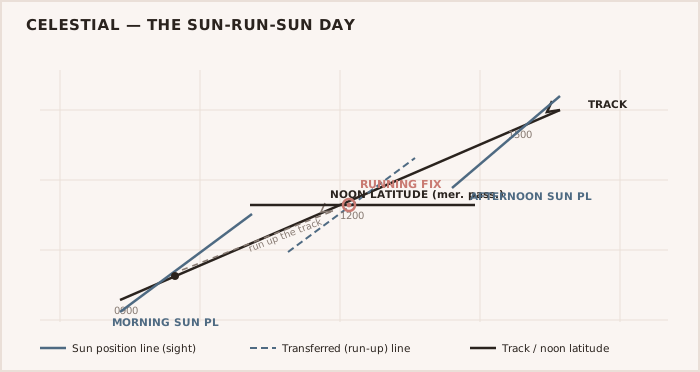
A day's work with the sun
- Take a morning sun sight for a position line, and run it up along the boat's track through the forenoon.
- At meridian passage (local noon) measure the sun's maximum altitude, which gives latitude directly.
- Take an afternoon sight and cross it with the run-up morning line for a running-fix position.
- Use the sun's azimuth at any sight, or its bearing at rising or setting (amplitude), to check compass error.
The noon latitude
Meridian passage is the moment the sun crosses the observer's meridian, when it bears due south (in the northern hemisphere) and reaches its greatest altitude for the day. At that instant latitude follows directly from the true altitude and the sun's declination, with no assumed position and no complex sight reduction — which is why the noon latitude is the ocean navigator's daily anchor. The time of meridian passage can also be used to find longitude. A morning sight run up to the noon latitude, and an afternoon sight run back, together give a reliable running fix around midday.
TIP — Noon needs no assumed position Unlike an ordinary sight, the meridian-passage latitude falls straight out of the maximum altitude and the declination. It is the simplest and most robust fix component of the ocean day, so it is worked every day the sun shows.