
Collision avoidance by day and night
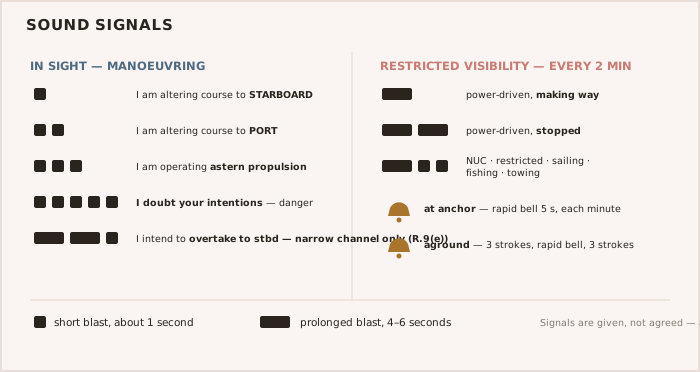
The collision regulations apply fully offshore: keep a proper lookout, proceed at a safe speed, use all means including radar to judge risk, and take early, bold action. In the power-driven encounters the skipper alters to starboard for a head-on or crossing situation and keeps clear when overtaking, and recognises ships by their lights and shapes at night. In or near restricted visibility, Rule 19 applies and there is no stand-on vessel: both proceed with caution by radar, and a small yacht keeps well clear of shipping that may not have seen her.
| Encounter | Action |
|---|---|
| Head-on (power) | Both alter to starboard, pass port to port |
| Crossing (power) | Give way if the other is on your starboard side; alter to starboard |
| Overtaking | The overtaking vessel keeps clear |
| Restricted visibility | No stand-on vessel; safe speed and avoid close-quarters |
| The encounters an offshore skipper must handle at once. |
Emergencies at sea
Serious emergency offshore
- Raise the alarm and account for every person aboard.
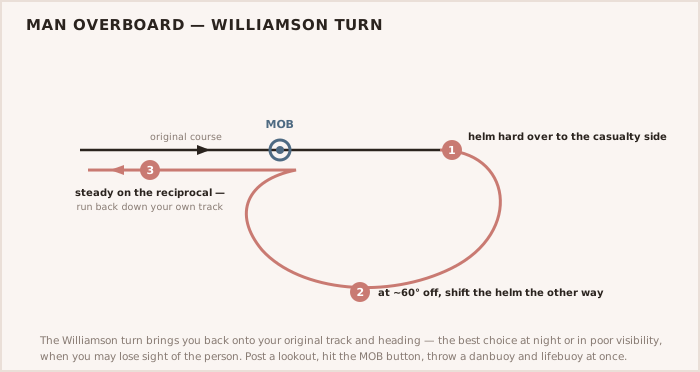
- Assess and act: recover a man overboard, fight a fire or control flooding using the practised drill.
- Make a distress (MAYDAY) or urgency (PAN-PAN) call by DSC and voice, giving position and the nature of the distress.
- Prepare the liferaft and grab bag; abandon to the raft only as a last resort with everyone accounted for.
WARNING — In restricted visibility there is no stand-on vessel Under Rule 19 neither vessel stands on; both must proceed at a safe speed and avoid a close-quarters situation. A small yacht keeps well clear of shipping that may not detect her on radar.
TIP — Step up into the liferaft The rule for abandonment is to step up into the raft — leave the boat only when she can no longer support you, because a disabled yacht is almost always a better survival platform than a liferaft.