
Managing fuel
- Plan the consumption and the reserves for the intended voyage, with a margin for weather and delay.
- Manage fuel quality: sampling, filtration, purification and water control.
- Keep the oil record book and comply with MARPOL on any discharge.
- Plan and supervise bunkering as a controlled, risk-managed operation.
Bunkering safely
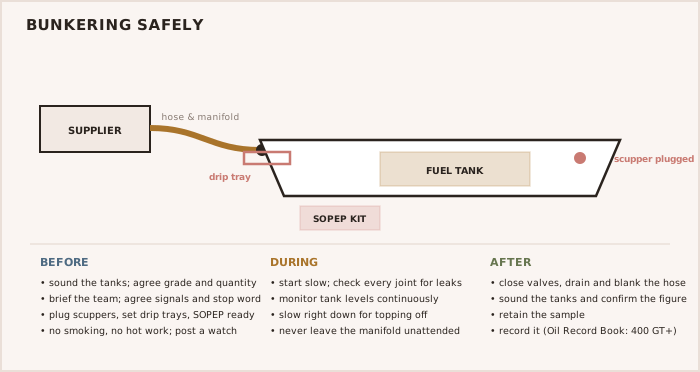
Managing a bunkering operation
- Plan the transfer: the quantities, the tanks, the rates, and a signed procedure agreed with the supplier.
- Prepare: brief the team, close the scuppers, set drip trays, and agree the communications and the emergency stop.
- Transfer: monitor the tank levels continuously, never overfill, and sound the tanks as you go.
- Complete: confirm the quantity and quality, take a sample and record it, and secure the system.
WARNING — Continuous monitoring and an emergency stop The single most important precaution against a bunkering spill is continuous tank-level monitoring with an agreed way to stop the transfer instantly. Most bunkering spills are overfills that a moment's inattention allowed.
TIP — Sample and record every bunker Take and keep a representative sample of every fuel delivery and record the quantity and quality. It protects against disputes and against a bad batch of fuel that could damage the engines.