
Operating and maintaining the systems
- Fuel: storage, transfer, purification and filtration, and the management of fuel quality and water content.
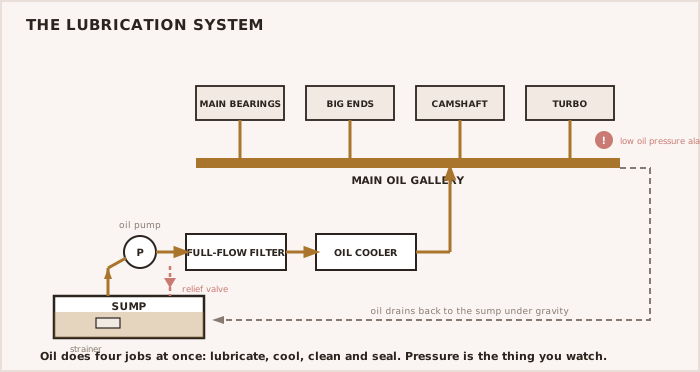
- Lubrication: the oil systems, filtration, the oil cooler, and monitoring the oil condition for contamination.
- Cooling: the sea and fresh-water circuits, the pumps, heat exchangers, thermostats and the expansion arrangements.
- Fault-finding and routine maintenance across all three systems.
These systems are monitored continuously on watch: the fuel kept clean and the day tanks topped, the lube-oil pressure and temperature watched, and the cooling-water temperatures held in their normal band. A loss of lube-oil pressure is one of the most serious warnings an engineer can see, because it leads quickly to bearing damage and seizure; the response is to investigate at once and stop the engine if pressure cannot be restored.
WARNING — Loss of lube-oil pressure — act at once A sudden drop in lubricating-oil pressure risks rapid, severe engine damage. Investigate immediately, and if the pressure cannot be restored, stop the engine — a seized engine is far worse than a stopped passage.
TIP — Keep the fuel clean and the day tank topped Clean fuel and a properly filled day tank prevent the fuel starvation and water problems that cause many engine stoppages. Draining water traps and changing filters on schedule is routine watch work.