
Entry & progression
The bilge system keeps the ship afloat. The oily water separator keeps you out of prison. They share pipework and they share your attention, and they must never share a shortcut.
The bilge system
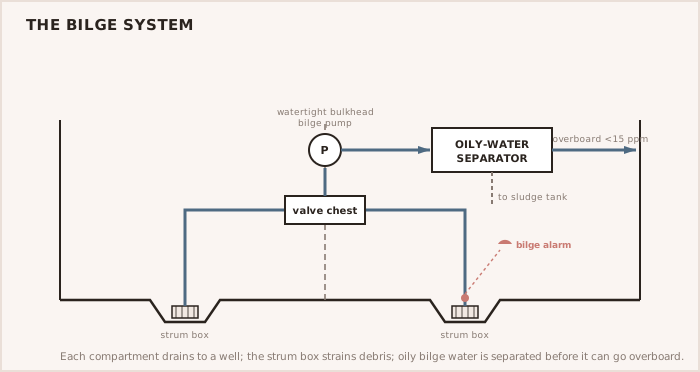
- Bilge wells with high-level alarms. Test the alarms. A high-level alarm that has never been proved is not an alarm
- Bilge suctions and strainers — kept clear, because the day you need them you will need them fast
- The emergency bilge suction — a large-bore direct suction from the main seawater cooling pump into the engine room bilge. It is a flooding control, not an oil transfer route. Know where it is and know how to open it in the dark
- Bilge holding tank — dirty bilge water is pumped here, and settles
- Sludge tank — purifier sludge, drains, oil residues. Discharged ashore
WARNING — Rising bilge level is an emergency until proved otherwise Water is coming in from somewhere. Before you pump it away, find out where from. A bilge pump that keeps up with a leak is masking the leak, and the leak is getting bigger. Sound the bilges, find the source, tell the bridge, and tell the chief.
The classic case is a failed seawater pipe or a cooler gasket, quietly filling the space while the automatic bilge system keeps up. Right up until it does not.
The oily water separator
The OWS separates oil from bilge water by gravity and coalescence, and its output is monitored by an oil content meter — a 15 ppm monitor — with a 15 ppm alarm and an automatic stopping device that shuts the overboard valve and recirculates when the effluent exceeds 15 parts per million.
The discharge criteria — MARPOL Annex I
- The ship is proceeding en route
- The oily mixture is processed through approved 15 ppm equipment
- The oil content of the effluent does not exceed 15 ppm
- The oily mixture does not originate from cargo pump room bilges on a tanker
- The oily mixture is not mixed with cargo oil residues
- Special areas attract additional restrictions
WARNING — The magic pipe A hose, a flange, a portable pump — anything that moves oily water past the 15 ppm monitor and over the side. It is the defining offence of marine engineering, and it has put more engineers in a cell than every other maritime crime combined.
The engineer who fits it goes to prison. The engineer who knows about it and says nothing goes with him. No chief engineer's instruction, no company pressure, no port schedule and no bonus is a defence.
If you are told to do it: do not do it, and report it.
Ballast
Ballast is trim, stability and stress. It is also biosecurity — ballast water carries organisms between ecosystems, and exchange, treatment and reporting are regulated internationally.
CAUTION — Australian ballast water and biofouling requirements Australia has its own biosecurity regime, and it is enforced seriously. The specific Australian ballast water management and biofouling requirements were not verified for this course. Do not assume the international minimum is enough. Check the current requirements with AMSA and with the Australian biosecurity authority before arrival.
Every litre that leaves the ship is your signature. Sign nothing you would not defend.