
Entry & progression
These are the three systems that decide whether a bad day becomes a very bad day. They spend their entire lives doing nothing, and then all of their value is spent in about four minutes.
The bilge system
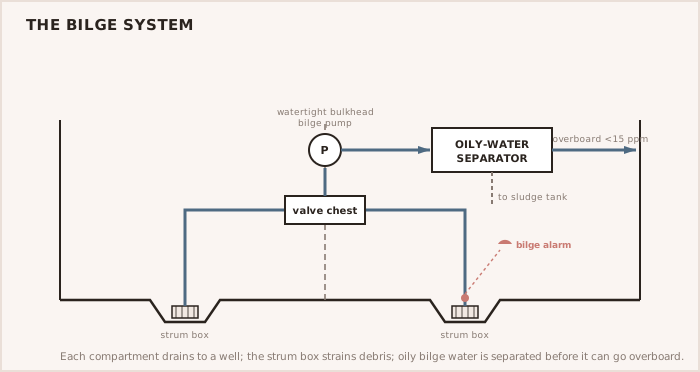
The bilge system moves water that should not be inside the boat back outside it. It typically comprises: suctions in each compartment, each with a strum box or strainer; a pump - electric, engine-driven, or hand; non-return valves that stop the sea coming back in through your own pipework; a discharge overboard; and alarms that tell someone before it is a crisis.
- The strum box is the whole game. It is a strainer on the end of the suction, and it blocks with the rubbish that lives in every bilge - rags, plastic, wood shavings, cable ties. A blocked strum box is a bilge system that does not work, and you will discover it at the worst moment.
- Keep bilges clean and dry. A clean bilge means a new leak is visible on day one. An oily, wet bilge hides a leak until it is a flood.
- Test the pumps and the alarms. Not by looking at them. By running them.
- Never pump oily bilge water overboard. The environmental consequences are serious and personal, and the vessel's own procedures will tell you what to do instead.
Fire systems
Fire needs three things - fuel, oxygen and heat - and every method of fighting it removes one of them. The engine room contains all three in abundance, plus hot surfaces, pressurised fuel and electrical ignition sources. It is statistically the most likely place on the vessel for a fire to start.
| Equipment | Removes | Notes for the engine room |
|---|---|---|
| Water / fire main | Heat | Never on live electrics, never on burning oil - it spreads it. |
| Foam | Oxygen | Good on burning liquids. Blankets the surface. |
| Dry powder | The chemical reaction | Effective, and it destroys machinery. A last resort in a clean space. |
| CO2 / fixed system | Oxygen | The engine room's own extinguishing system. |
WARNING — A fixed CO2 system will kill anyone left in the space It works by removing the oxygen. It cannot tell the difference between a fire and a person.
Before it is released: account for every soul, shut down ventilation, close the fire flaps and dampers, stop the fuel supply, and seal the space. Then release it, and leave it sealed - opening the space to look feeds the fire fresh air and it will re-ignite. Know where the release station is, and know who is authorised to operate it, before the day you need it.
Steering
On most vessels the steering is hydraulic: a pump at the helm, lines to a ram at the rudder stock. It fails in three ways, and you should know all three.
- Loss of fluid - a leak. The helm goes light and vague, then does nothing. Check the reservoir on every round; a falling level is a leak you have not found yet.
- Air in the system - spongy, delayed steering. Bleed it.
- Mechanical failure - a broken linkage, a seized ram, a failed pump.
Every vessel has an emergency steering arrangement - typically a tiller fitted directly to the rudder stock. Find it. Fit it. Now, in harbour, in daylight. It is always in a locker, it is always under something, and it is always the wrong size spanner. Doing that once, calmly, is the difference between an inconvenience and a grounding.
TIP — Test what you are relying on Bilge alarms, fire pumps, emergency steering, remote fuel shutoffs and emergency stops all share one property: nobody finds out they have failed until they are needed. Put them on a schedule, run them, and log the result. A tested system is worth ten untested ones.