
The main components
- Cylinder block, pistons, connecting rods and crankshaft — where the power is made.
- Cylinder head with the inlet and exhaust valves, and (on many engines) glow plugs to aid cold starting.
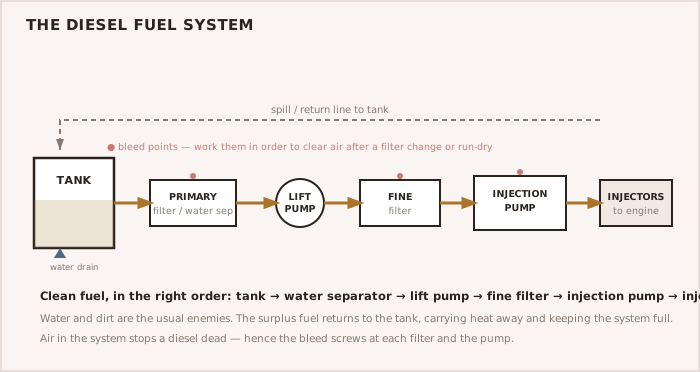
- Fuel system — tank, water-separating pre-filter, lift pump, fine filter, injection pump and injectors delivering clean fuel at the right time.
- Air system — air filter and, on many engines, a turbocharger to force more air in.
- Cooling, lubrication and electrical systems, described below.
The supporting systems
Three systems keep the engine alive. The cooling system on most marine diesels is indirect: raw seawater is drawn in, pumped through a heat exchanger to cool a closed fresh-water circuit, and discharged with the exhaust. The lubrication system pumps oil under pressure through a filter to all the moving parts, reducing wear and carrying away heat. The electrical system — battery, starter motor and alternator — starts the engine and keeps the battery charged. The operator watches the temperature, the oil pressure and the charging to know all three are healthy.
WARNING — No water at the exhaust means stop On starting, cooling water should appear at the exhaust within seconds. If it does not, stop the engine before it overheats and find out why — a shut seacock, a blocked strainer, or a failed impeller.
TIP — Know your gauges Learn the normal temperature, oil pressure and charging readings for your engine. A gauge drifting away from normal is an early warning to investigate before it becomes a failure.