
The load line and reserve buoyancy
The load line, or Plimsoll mark, painted on each side amidships, shows the maximum permitted draught for different zones and seasons and so guarantees a minimum freeboard. That freeboard is reserve buoyancy — the intact watertight volume above the waterline that keeps the ship afloat and provides the righting energy to come back upright in a seaway. The lines (S, W, T, F and so on) allow for water density and expected weather: a ship may load deeper in warm, dense, sheltered water than in a winter North Atlantic. The Fresh Water Allowance lets her float a little deeper in fresh water because she will rise on reaching the sea.
Watertight and weathertight integrity
- Watertight doors, hatches and openings must be closed and secured at sea to preserve the subdivision that keeps flooding in one compartment from spreading.
- Freeing ports and scuppers must be kept clear so that water shipped on deck drains away quickly rather than building up as dangerous weight.
- Ventilators, air pipes and skylights have closing appliances to be secured for heavy weather.
- Downflooding points — low openings through which water can enter if the ship heels or is damaged — are the vessel's weak spots and must be identified and kept shut.
The bilge system
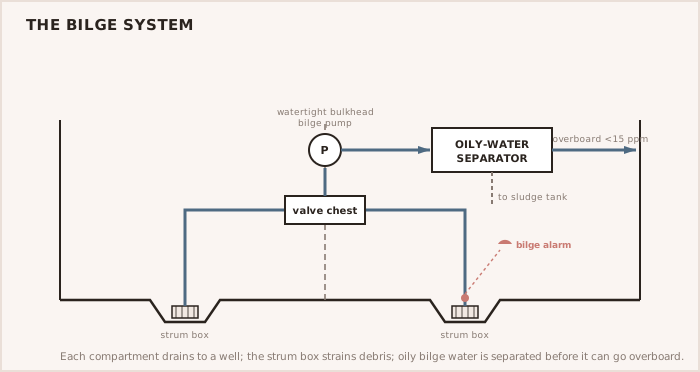
The bilge system removes water that collects in the lowest parts of the ship, drawing from bilge wells through strainers (mud boxes) and non-return valves to the bilge pumps and overboard, via an oily-water separator where required by MARPOL. The OOW should be able to read the bilge-system diagram, isolate and pump out any compartment, and recognise that a bilge alarm is a call to investigate at once, not to acknowledge and forget.
WARNING — Open doors and blocked scuppers sink ships A ship with damage but sound watertight integrity may well survive; the same damage with doors left open and scuppers blocked may not. Closing down for sea and heavy weather is a safety-critical routine, not paperwork.