
The points and levers
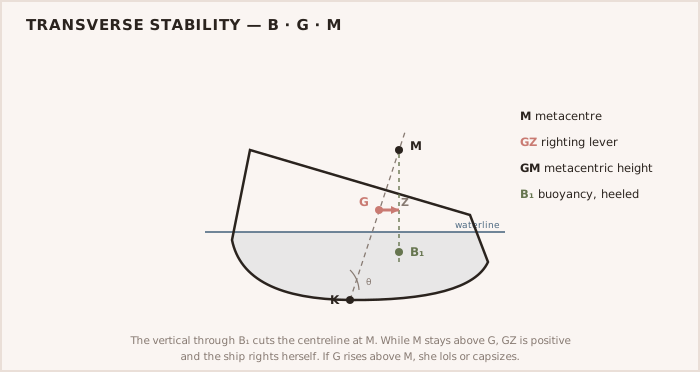
| Symbol | Meaning |
|---|---|
| G — centre of gravity | Where the total weight acts; rises when weight is added high |
| B — centre of buoyancy | Centre of the underwater volume; moves as the hull heels |
| M — metacentre | The point the ship appears to roll about at small angles |
| GM — metacentric height | Distance from G to M; the measure of initial (small-angle) stability |
| GZ — righting lever | The horizontal lever of the righting moment at a given angle of heel |
| The points and levers that define stability. |
Stiff, tender, and the things that reduce stability
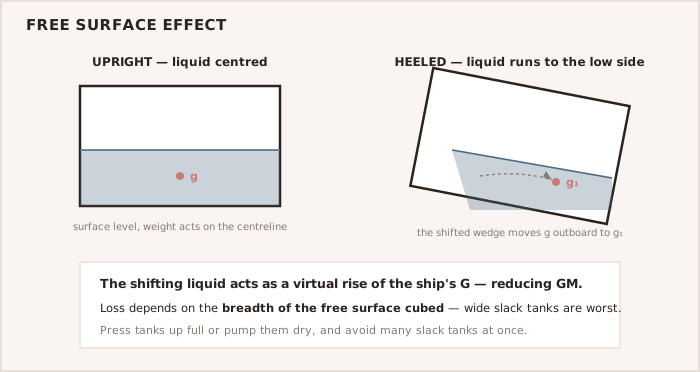
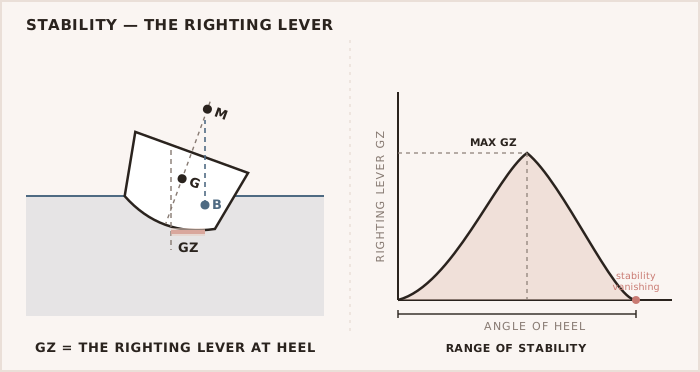
A positive GM means the ship is stable and returns upright when heeled. A large GM makes her 'stiff' — she rolls quickly and hard, which is uncomfortable and can damage cargo and structure; a small GM makes her 'tender' — a slow, sluggish, lolling roll that is dangerous because stability is marginal. The OOW can quietly erode stability in three classic ways: by loading weight too high, which raises G; by leaving tanks slack, whose free-surface effect acts as a virtual rise of G and can be large; and by allowing green water to build up on deck through blocked scuppers. The righting-lever (GZ) curve shows how the righting lever grows and then falls with heel, and its shape — the range of positive stability and the angle of vanishing stability — is what really tells you how safe the ship is at large angles.
WARNING — Weight high, water on deck, slack tanks The three quiet killers of stability are weight loaded too high, green water trapped on deck by blocked scuppers, and slack tanks free to slosh. Keep weight low, the deck draining, and tanks pressed up or empty.