
Lights of vessels underway and at anchor
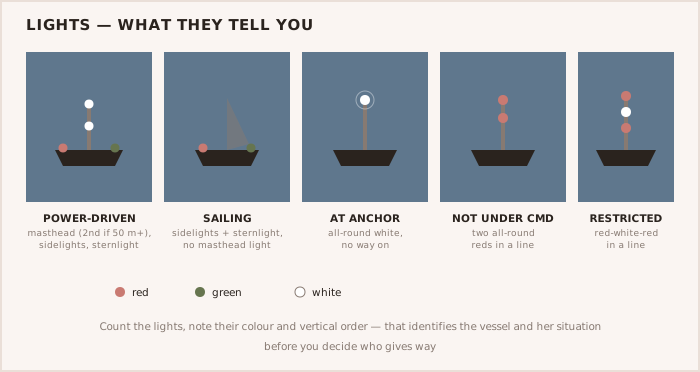
- A power-driven vessel underway: masthead light(s) forward (and a second, higher one aft on larger vessels), red port and green starboard sidelights, and a white sternlight.
- A sailing vessel underway: sidelights and a sternlight only, no masthead steaming light (optionally a tricolour at the masthead, or all-round red-over-green).
- A vessel at anchor: an all-round white light forward (and a second aft if 50 m or more), plus deck lighting on larger vessels.
- A vessel not under command: two all-round red lights in a vertical line, and no steaming lights if stopped.
- A vessel restricted in her ability to manoeuvre: red-white-red all-round lights in a vertical line.
Shapes and sound signals
| Indication | Day shape | Fog signal (restricted visibility) |
|---|---|---|
| Power-driven making way | (none specific) | One prolonged blast every 2 min or less |
| Power-driven underway but stopped | (none specific) | Two prolonged blasts every 2 min or less |
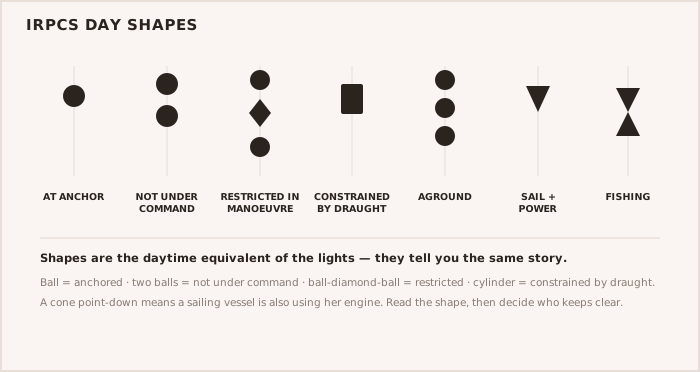
| At anchor | One black ball forward | Rapid ringing of the bell for 5 s every minute |
| Not under command | Two black balls in a vertical line | One prolonged + two short (as for RAM/sailing) every 2 min |
| Restricted in ability to manoeuvre | Ball-diamond-ball in a vertical line | One prolonged + two short every 2 min |
| Common day shapes and fog signals. |
Manoeuvring and warning signals (Rule 34) are given on the whistle when vessels are in sight of one another: one short blast means 'I am altering my course to starboard', two short blasts 'to port', three short blasts 'my engines are going astern', and five or more short and rapid blasts signal doubt or that the other vessel's intentions or actions are not understood — the classic warning when a give-way vessel is not acting.
TIP — Learn the vertical patterns as pictures Two red = not under command ('red-red, I'm dead' in the water); red-white-red = restricted; ball-diamond-ball for RAM by day. Picture the vertical stack and the meaning follows.