
Running the watch and the bridge equipment
The OOW keeps the watch to the principles of STCW Code section A-VIII and the ICS Bridge Procedures Guide: a proper lookout, regular position monitoring by more than one method, correct use and monitoring of the equipment, and a full and unhurried handover. The examiner may ask about the rate-of-turn indicator, the course recorder, the echo sounder, NAVTEX, the off-course and other alarms, and the changeover from autopilot to hand steering. Every OOW must be able to take manual control instantly, because the ability to switch to hand steering without hesitation is what saves the ship in a close-quarters situation or a steering fault.
Ship handling fundamentals
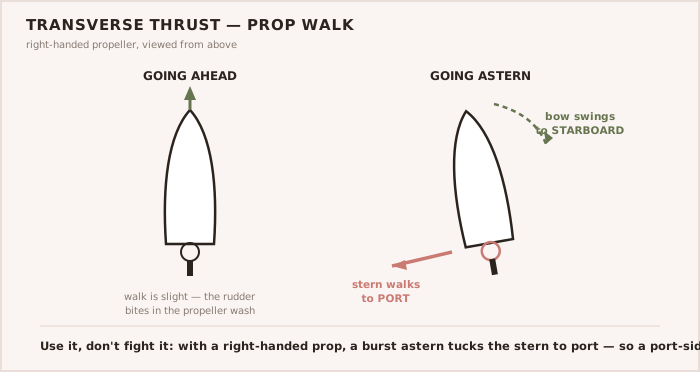
- Understand the effect of the propeller, including transverse thrust ('paddle-wheel effect') that kicks the stern one way, and how wind and current act on the hull and superstructure.
- Know interaction and squat in shallow and narrow water — the ship sits deeper and steers strangely, so reduce speed.
- Be able to describe berthing and unberthing, the use of mooring lines and springs to control the ship, and the standard helm and telegraph orders.
- Know the drill for a steering-gear or telegraph failure and how to rig and change to emergency steering.
- Understand anchoring: preparation, letting go, the scope of cable, holding ground, and the signs and actions for dragging.
NOTE — The examiner wants the reasoning, not a recital Describing what you do matters less than explaining why. Talk through how wind and thrust act on this ship and how you use them, and how you would recover a steering failure — that is what shows command potential rather than rote learning.
WARNING — Squat catches ships in shallow water At speed in shallow water the ship squats bodily lower and can touch bottom in water that looked adequate on the chart. The remedy is simple and must be instinctive: reduce speed.