
Entry & progression
Entry: L3.1 and L3.2. Progression: the mains get the attention; the auxiliaries end the charter. Also: the auxiliaries you do not have can restrict your STCW certificate. See the caution below.
The seawater system is the artery
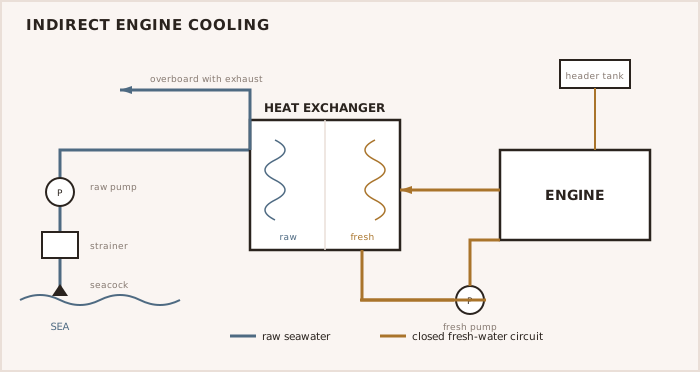
It cools the mains, the gensets, the gearboxes, the air conditioning and the refrigeration, and it feeds the watermakers. One blocked sea chest and every one of those alarms goes at once — which is exactly the kind of casualty that looks catastrophic and is, in fact, a plastic bag. Know where every strainer is, know how to clear a sea chest at sea, and know which valves you would have to close to do it. Growth in the chest and in the pipework is a real and gradual loss of flow, and it looks like an engine problem for months before anyone suspects the plumbing.
Bilge and fire
The bilge system is a safety system, so treat it like one: test the pumps and the alarms on a schedule and log it. Know your dewatering capacity honestly, know what a portable pump can add, and know that a strainer clogged with the debris of a real flooding event is the classic way a dewatering effort fails. The fire pump is the same discipline: run it, prove pressure at the furthest hydrant, and know how to run it when the main source is the thing that is on fire.
Steering — the failure that frightens people
Loss of steering in a channel is worse than loss of an engine. Know the system: where the power comes from, whether there are two independent pumps, where the emergency tiller is stowed, how many people it takes to use it, and how long it actually takes to change over. Then time it. A boat that has never rigged its emergency steering does not have emergency steering. It has a bar in a locker.
Hydraulics
Passerelle, cranes, tenders, davits, anchor windlass, stabilisers — one power pack, many consumers, and every one of them a potential leak. Hydraulic failures on yachts are dominated by two things: contamination and hoses. Keep the fluid clean, change the filters, sample it, and replace hoses on age rather than on failure. And treat a pinhole leak with genuine respect: injection injury from high-pressure fluid is a surgical emergency that looks like a scratch. Never search for a leak with your hand.
The rest of the family
- Air conditioning and chilled water — the guests' definition of whether the boat works.
- Watermakers — membranes die from neglect in lay-up, not from use.
- Refrigeration — the freezer that fails on day two of a charter.
- Sewage treatment — the machine nobody wants to learn until the day they must.
- Oily water separator, where fitted — see Lesson 4.2. Learn it properly. It is the one auxiliary that can end a career.
CAUTION — The auxiliaries you lack can restrict your STCW ticket — 46 CFR 11.323(b)(2) An STCW endorsement may be "endorsed as limited to serve on vessels without auxiliary boilers, waste-heat boilers, distilling plants, oily water separators, or sewage treatment plants." Many yachts have none of those. A yacht-trained engineer can therefore end up with a restricted certificate without ever noticing, and only find out when they apply for a job on a vessel that has them. The limitation is removable by demonstrating the competencies — but you have to know it is there. If your boat has any of these machines, get your hands on them and get the competence signed off while you can.