
Entry & progression
One paragraph of bad news, stated plainly and then left behind. The rest of this lesson is the route — the actual sequence of endorsements a yacht engineer climbs, and which course in this library teaches each one.
The honest position
There is no USCG yacht engineering credential. 46 CFR 11.501 is a closed list of thirteen national engineer grades, and it makes special provision for fishing vessels, MODUs and OSVs — and not for yachts. A yacht engineer on a US-flagged vessel therefore holds the ordinary commercial engineering credential: the same Designated Duty Engineer, the same Assistant Engineer-Limited, the same Chief Engineer as the man on a tug or a tanker. That is the right ladder to learn, and it is the ladder this library teaches.
That is the whole of the bad news. It is not an injustice and it is not worth another paragraph. The commercial ticket is a good ticket — it is portable, it is respected, it does not shrink when the yacht is sold, and it is the one the industry actually hires on. Now here is how you climb it.
The realistic yacht route
- QMED — Qualified Member of the Engine Department. The first real rung, and the one that unlocks everything above it. (→ the USCG QMED course.)
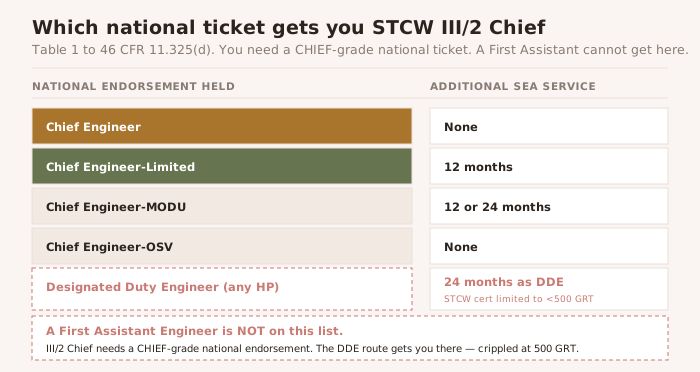
- DDE or Assistant Engineer-Limited — the first officer endorsement. DDE is the sole-engineer ticket, capped at less than 500 GRT. AE-Limited reaches less than 1,600 GRT on ocean and near-coastal routes. (→ the USCG DDE and Engineer-Limited courses.)
- Chief Engineer-Limited — chief on the same class of vessel. Five years in the engineroom, and the crossover rung. (→ the USCG Engineer-Limited course.)
- The crossover into the unlimited ladder — one year as Chief Engineer-Limited plus the examination is a route to First Assistant Engineer. This is the door between the two ladders, and most people never learn it is there. (→ the USCG unlimited engineering course.)
- STCW III/1 — OICEW, then III/3, then III/2. The international side, scoped in kW, and what a large foreign-going yacht will actually ask you for. (→ the USCG OICEW and STCW engineering courses.)
TIP — Two rungs are worth more than they look Chief Engineer-Limited is the crossover — one year in it plus an exam opens First Assistant Engineer on the unlimited ladder. And OICEW is the operational-level STCW endorsement that everything international is built on. Reach those two and the rest of the pathway is an accumulation problem, not a strategy problem.
The three things that will actually stop you
- Citizenship. 46 CFR 11.201(d): no officer endorsement may be issued to any person who is not a citizen of the United States. Every engineer officer grade. No exception. Most yacht crew are not US citizens, and for them this pathway ends here — the honest answer is to look at another administration.
- Recency. Three months of required service in the last three years (11.201(c)(1)). The shore job is the career-killer.
- Evidence. The walk-in engine room test and the attestation rule — Module 1. Time you cannot document is time you did not do.
CAUTION — This course is the map, not the territory The MMC application itself — TWIC, the medical certificate, the drug test — is the USCG MMC course in this library, not this one. And every requirement in this course is subject to the current NMC checklist for the endorsement you are chasing. Sea service crediting and manning practice change. Verify with the National Maritime Center, and — where a specific vessel is involved — with the cognizant OCMI, before you make a career decision on any of it.