
Entry & progression
Exam module: Q170. Optional endorsement: commercial assistance towing (46 CFR 11.482) may be added to an OUPV.
Scope
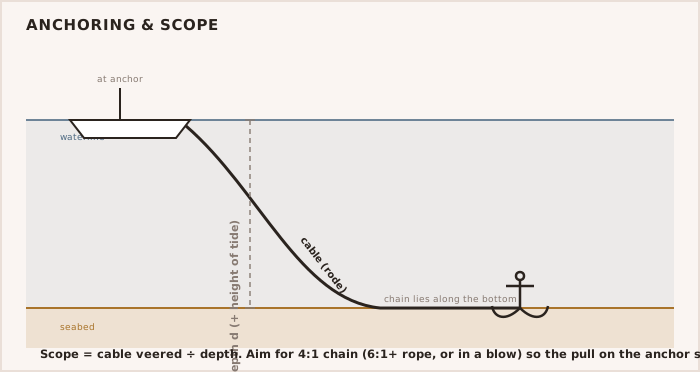
The ratio of anchor rode paid out to the depth of water plus the height of the bow above the water. That second term is the one candidates forget, and in a small boat in shallow water it is a large fraction of the total.
| Condition | Working scope |
|---|---|
| Rope rode, normal conditions | 7:1 |
| Chain rode, normal conditions | 5:1 — the catenary of the chain does part of the work |
| Heavy weather | 10:1 or more, and a second anchor |
| Lunch hook, settled, attended | 3:1 — and never left unattended |
Scope works because it keeps the pull on the anchor horizontal. The moment the rode lifts and the pull turns upward, the anchor breaks out. That is the whole theory, and it explains every rule of thumb above.
Setting an anchor
Anchoring
- Choose the berth: shelter, holding ground, swinging room for a 360° turn on your full scope, depth at low water.
- Approach into wind or current, whichever is dominant, and stop the boat over the spot.
- Lower — do not throw — the anchor, and pay out as the boat falls back.
- Pay out the full scope, then snub the rode and set the anchor astern on the engine.
- Take transits ashore and check them. A bearing that changes is a dragging anchor.
Assistance towing
This is a real endorsement and a real liability. 46 CFR 11.482 provides a commercial assistance towing endorsement, which the NMC checklist lists as optional on an OUPV. It authorises towing for hire — the salvage and tow-service trade.
Taking a vessel in tow
- Agree terms before you make fast. Assistance towing for hire is a commercial act. Establish that it is a tow, not salvage, and that both parties understand it.
- Rig the tow from a strong point, as low and as far forward of the rudder as practicable, so the tug can still steer.
- Use a long, elastic tow line, and adjust its length so both vessels ride the same part of the wave — both on crests or both in troughs.
- Take up the strain slowly. A snatch load is what parts lines and pulls out cleats.
- Keep a sharp knife or axe at the towing point. If the tow goes wrong, you may have seconds.
- Shorten the tow for harbour work and consider going alongside.
WARNING — A tow line under load is lethal A parting line snaps back with enough energy to kill. Keep everyone out of the snapback zone — the area in line with the tow, on both vessels. Nobody stands behind a loaded line, ever, and nobody stands in the bight of it.
Knots you will be asked about
- Bowline — a fixed loop that will not slip and unties after load. The most useful knot afloat.
- Clove hitch — quick to a rail or piling, but works loose under a varying load. Back it up.
- Round turn and two half hitches — the reliable way to secure to a ring or post under load.
- Cleat hitch — a full turn first, then figure eights, then a locking hitch. One locking turn, not three.
- Figure eight — the stopper knot.
- Sheet bend — joining two lines, especially of unequal diameter.